

Learning Journey: Beyond Seafood in Ban Laem, Nakhon Si Thammarat
How a Traditional Fishing Community Is Protecting Thailand's Oceans Through Regenerative Tourism
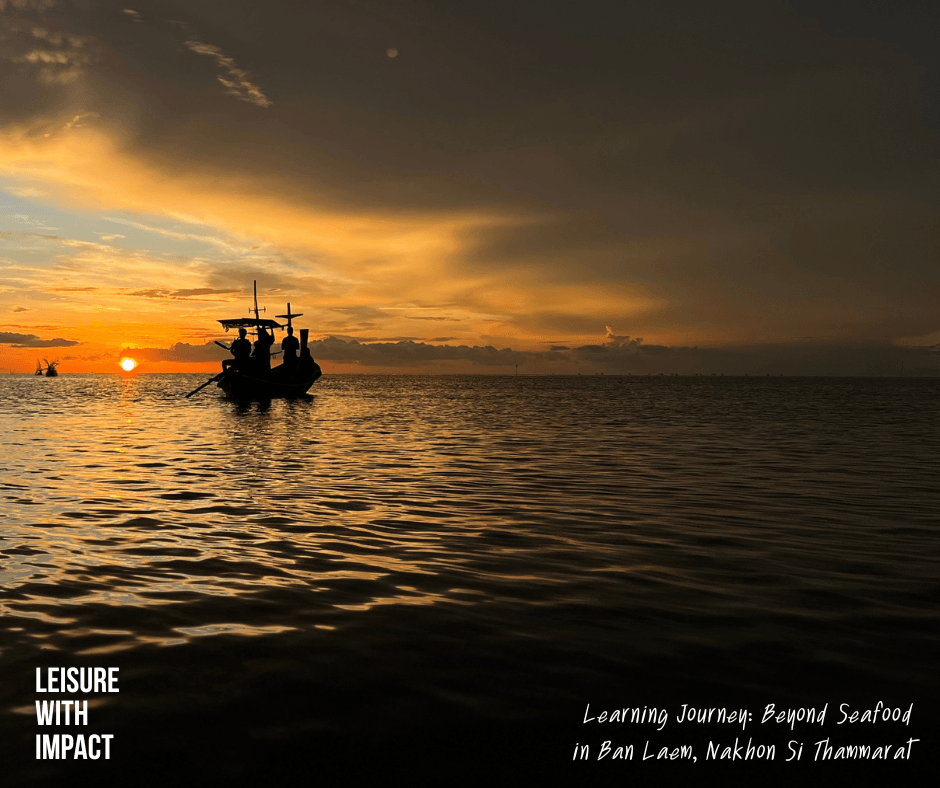
What if your seafood could tell a story?
For most of us, seafood begins on the plate. In Ban Laem, a traditional fishing community in Nakhon Si Thammarat, it begins much earlier with small fishing boats heading out before sunrise, carefully repaired nets, and local fishers who understand that the future of the sea depends on how we care for it today.
Recently, the SiamRise Travel team joined a Regenerative Tourism Learning Journey in Nakhon Si Thammarat, organised by the Tourism Authority of Thailand (TAT) in collaboration with The Cloud. The programme brought together tourism professionals to explore how local communities are protecting natural and cultural heritage while creating meaningful travel experiences for visitors.
During our visit to Ban Laem, we discovered how traditional fishing practices, local wisdom, and community collaboration are helping restore the relationship between people and the sea showing that tourism can do more than simply minimise its impact; it can become a force for positive change.
Looking Beyond the Seafood
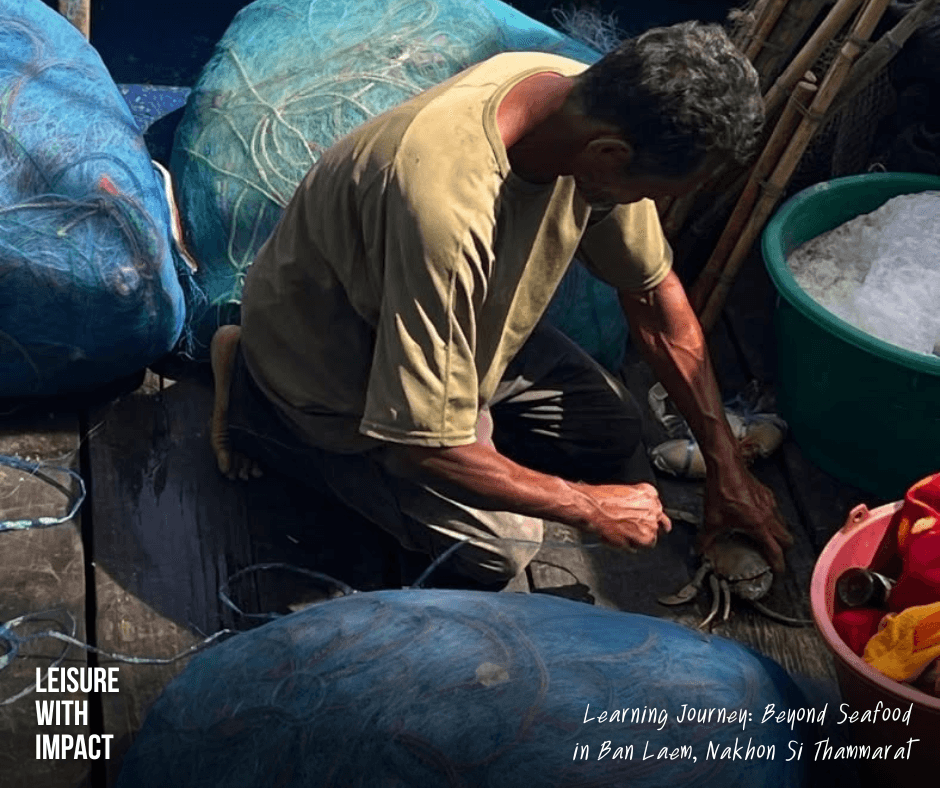
In Ban Laem, fishing is not about catching as much as possible. Instead, local fishers take only what the sea can naturally provide, allowing fish populations time to recover. Their knowledge has been passed down through generations, creating a balance between people and nature that continues today.
Watching this way of life reminded us that every seafood meal has a story, one that begins with respect for the ocean.
Why Healthy Oceans Matter
The ocean faces many challenges that are difficult to see. Unlike forests, where environmental damage is visible, declining fish populations and damaged marine habitats often remain hidden beneath the surface. According to SDG Move, one of Thailand's biggest marine challenges is not only overfishing but also destructive fishing practices that damage coral reefs, catch juvenile fish, and disturb marine ecosystems. Communities like Ban Laem demonstrate that traditional fishing knowledge canplay an important role in protecting these natural resources for future generations.
When Tourism Gives Back
This is where regenerative tourism makes a difference.
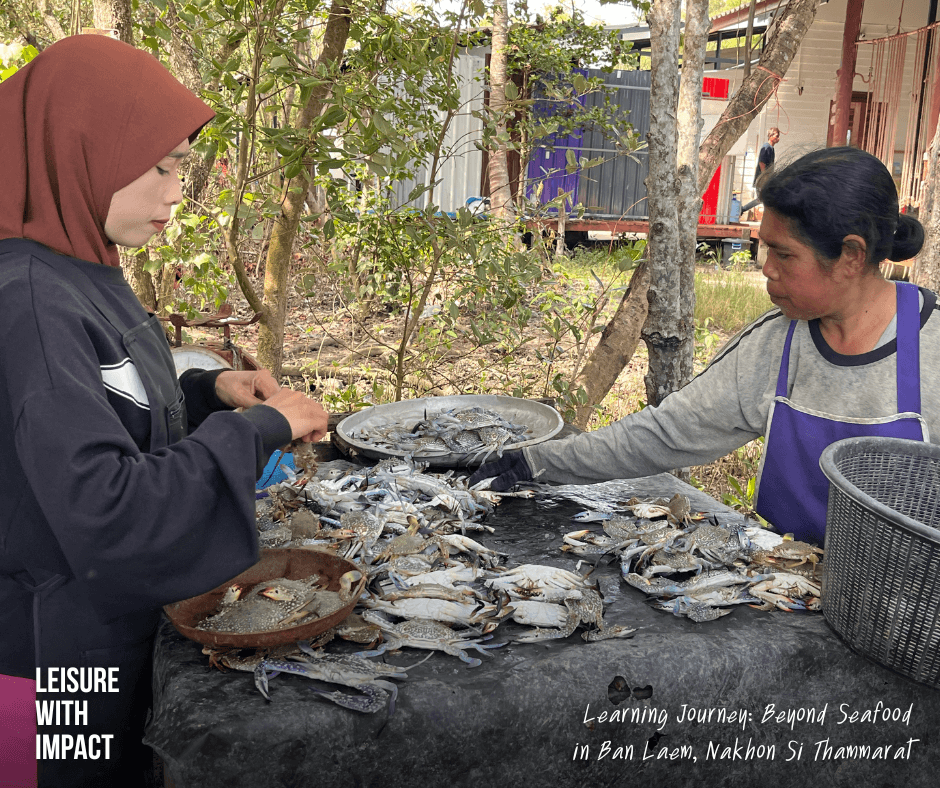
Rather than simply visiting a destination, travellers become part of apositive story by supporting communities that care for their natural environment.
A visit to Ban Laem helps:
- Supportlocal small-scale fishing families.
- Encourage responsible fishing practices.
- Preserve traditional knowledge and coastal culture.
- Create meaningful learning experiences that connect people with the ocean.
Travel becomes more than a holiday. It becomes a way to contribute to thefuture of the destination.
Leisure With Impact
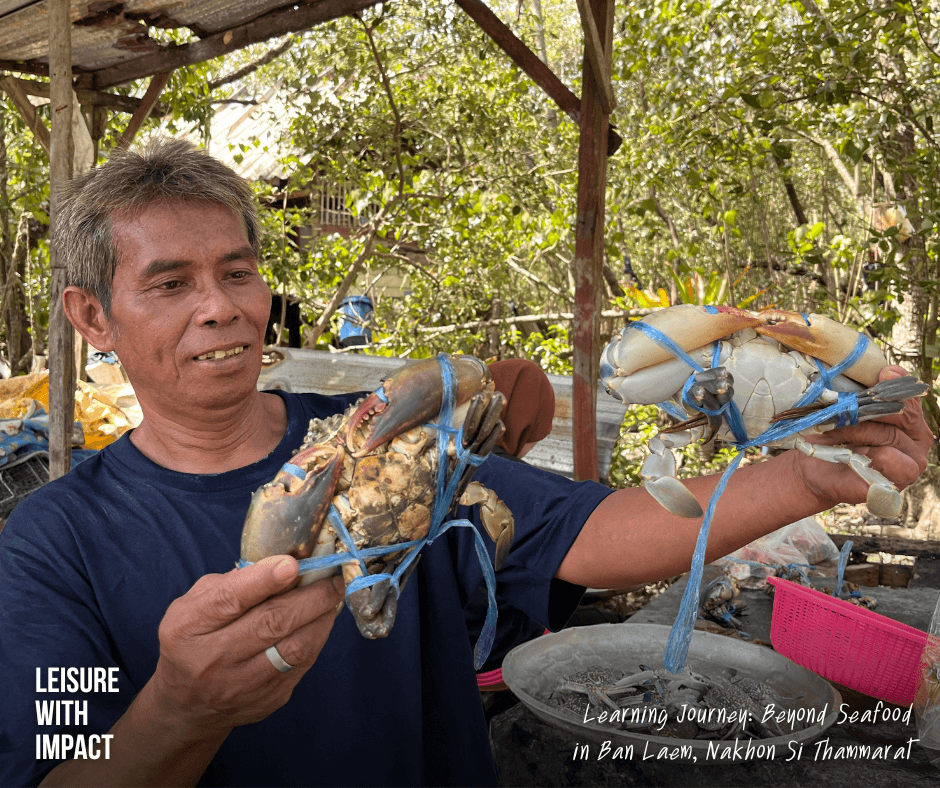
Our visit to Ban Laem reminded us that some of the most memorable journeys are not about famous attractions, but about meeting the people who quietly protect them every day.
At SiamRise Travel, we believe meaningful travel starts by listening, learning, and respecting local communities. Because when travellers understand the story behind their seafood, they don't just enjoy a great meal. They leave with a deeper appreciation of Thailand's coastal heritage and the people working to protect it. That is what Leisure With Impact means to us.
Key Takeaways
- Ban Laem is a traditional fishing community in Nakhon Si Thammarat.
- Local fishers use responsible fishing practices that help protect marine ecosystems.
- Visitors gain a deeper understanding of sustainable seafood and coastal livelihoods.
- Regenerative tourism creates positive benefits for both local communities and the environment.
- Every meaningful journey helps preserve Thailand's living cultural and natural heritage.
Planning a Meaningful Journey in Thailand?
Discover how community-based tourism can connect you with local people,traditional knowledge, and authentic experiences across Thailand.
Travel with purpose. Travel with impact.